
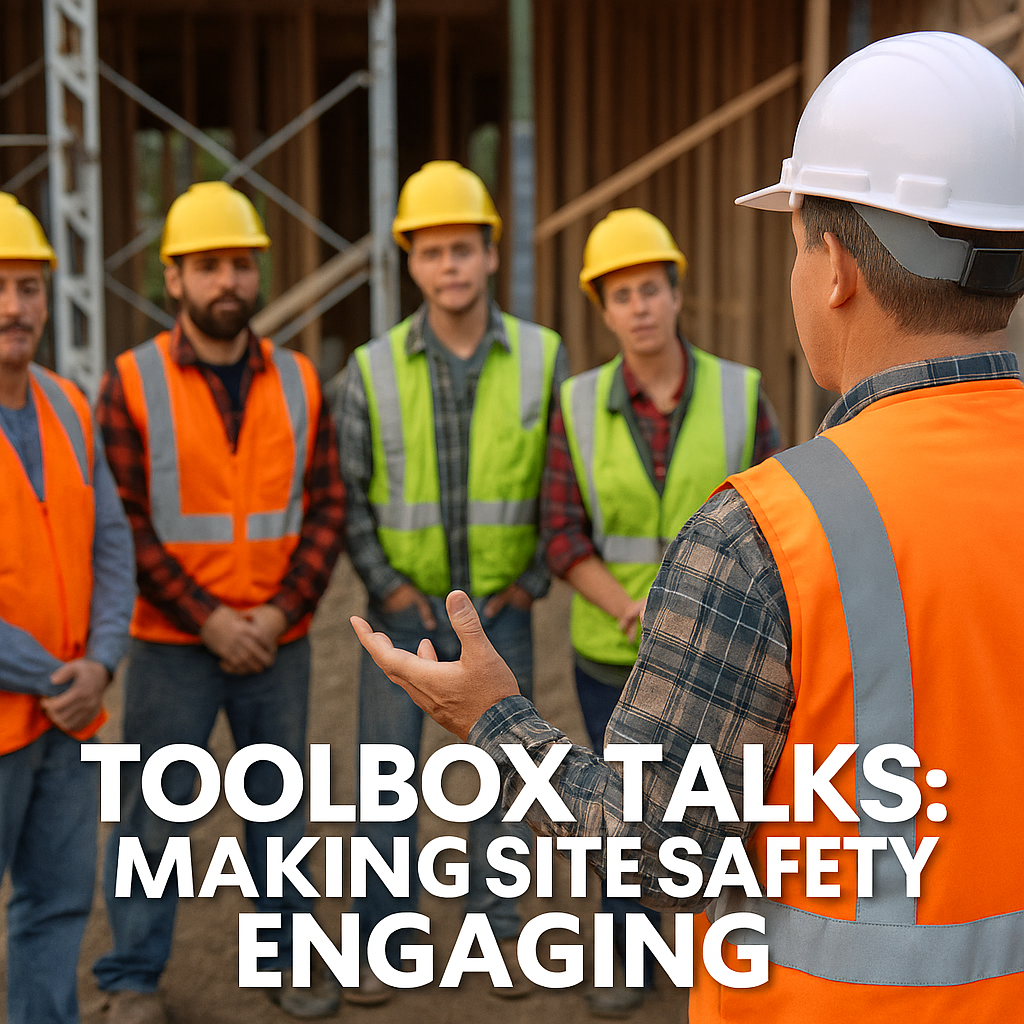
Toolbox Talks Reimagined: Making Site Safety Engaging and Effective
Toolbox talks have long been a staple of construction site safety – brief, focused sessions designed to reinforce safe working practices and regulatory compliance. But let’s be honest: too often, they’re met with glazed eyes and ticking clocks. In an industry where attention to detail can mean the difference between a close call and a serious incident, it’s time to reimagine how we deliver these vital messages. By making toolbox talks more engaging, interactive and relevant, we can transform them from routine reminders into powerful safety culture drivers.
Why Toolbox Talks Matter for Construction Site Safety
Toolbox talks are not just a checkbox exercise. Under UK health and safety regulations, including the Health and Safety at Work Act 1974 and the Construction (Design and Management) Regulations 2015, employers have a legal duty to provide information, instruction and training to ensure workers’ safety. Toolbox talks help meet these obligations by:
• Reinforcing site-specific hazards and control measures
• Promoting awareness of changing conditions and tasks
• Encouraging open dialogue about risks and near misses
• Supporting continuous improvement in safety behaviours
But compliance alone isn’t enough. To truly protect workers, we need engagement.
From Monologue to Dialogue: Engaging Toolbox Talk Formats
The traditional format – a supervisor reading from a sheet while the team listens passively – does little to spark interest or retention. Instead, consider these formats that invite participation and make safety memorable:
• Scenario-Based Discussions: Present a real or hypothetical incident and ask the team to identify what went wrong, what could have prevented it and how similar risks apply to their current tasks.
• Interactive Demonstrations: Use props or live demos to show correct PPE use, lifting techniques or equipment checks. Seeing is believing and helps with retention and remembering.
• Quiz or Game Formats: A quick-fire safety quiz or “spot the hazard” challenge can energise the group and reinforce learning through friendly competition.
• Peer-Led Talks: Rotate facilitators so that operatives lead sessions. This builds ownership and often surfaces practical insights from those closest to the work.
Safety Topics That Stick: Make It Relevant
To keep toolbox talks fresh and impactful, tailor them to current site activities, seasonal risks and recent observations. Some high-impact topics include:
• Working at height: Harness checks, edge protection, ladder safety
• Manual handling: Lifting posture, load assessment, team lifts
• Plant and vehicle movement: Spotter roles, exclusion zones, reversing protocols
• Mental health and fatigue: Recognising signs, support resources, break culture
• Fire safety: Hot works permits, extinguisher types, evacuation routes
Always link the topic to real site conditions and encourage workers to share their own experiences or concerns.
Visuals and Storytelling: The Power of a Good Hook
Construction workers are visual learners. A well-chosen image, diagram or short video can convey more than a page of text. Consider using:
• Infographics showing incident stats or PPE layers
• Photos of good and bad practice (anonymised and approved)
• Short animations or clips from safety campaigns
Pair visuals with storytelling. A compelling anecdote – whether from your own experience or a known case study, can humanise the message and make it stick.
Building a Safety Culture, One Talk at a Time
Reimagining toolbox talks isn’t just about better delivery – it’s about embedding safety into the site’s culture. Here’s how to make them part of a broader strategy:
• Consistency: Hold talks regularly, ideally daily or weekly and keep them short (5-10 minutes).
• Documentation: Record attendance and topics discussed to demonstrate compliance and track trends.
• Feedback Loop: Invite suggestions for future topics and act on concerns raised.
• Recognition: Acknowledge contributions and safe behaviours during talks to reinforce positive norms.
Compliance Meets Creativity: Staying Within the Rules
While creativity is key, toolbox talks must still comply with legal and regulatory standards. Ensure that:
• Content aligns with HSE guidance and site-specific risk assessments
• Talks are delivered by competent persons with relevant knowledge
• Records are kept for audit and incident investigation purposes
• Language is clear, inclusive and respectful of all workers
If in doubt, consult your health and safety advisor or refer to HSE’s toolbox talk resources.